

The board asks. The customer asks. The sales team asks. You answer with your gut. Engineering reality is somewhere else, and you find out at the next retrospective.
Teams over-commit. Capacity is "vibes." Working harder isn't shipping faster, and you can't tell whether team performance is improving or just feeling that way.
Reports exist. Insights are produced. But the org doesn't act on them. Forecasts are made in spreadsheets, monthly, by someone — and nobody trusts them.
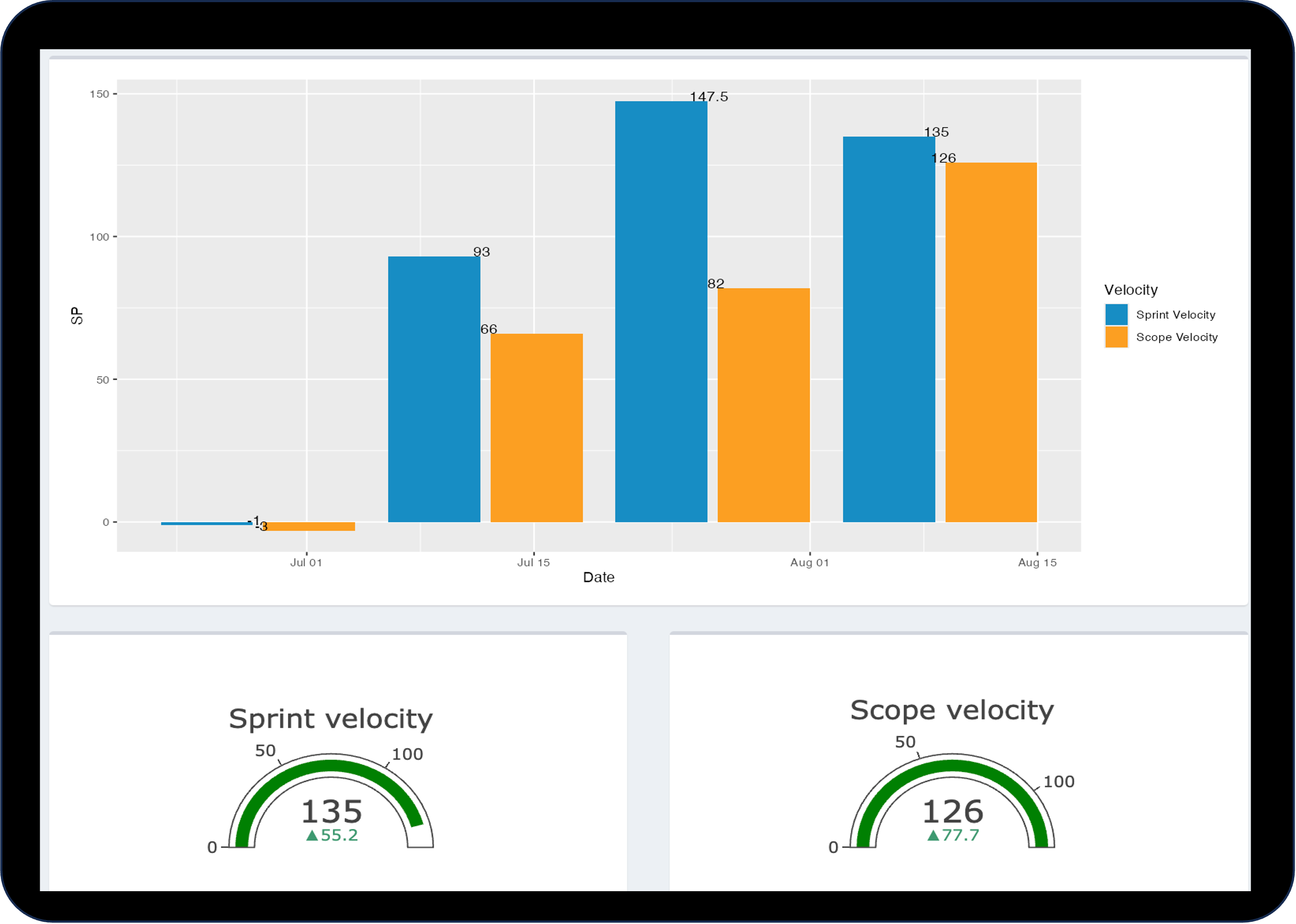
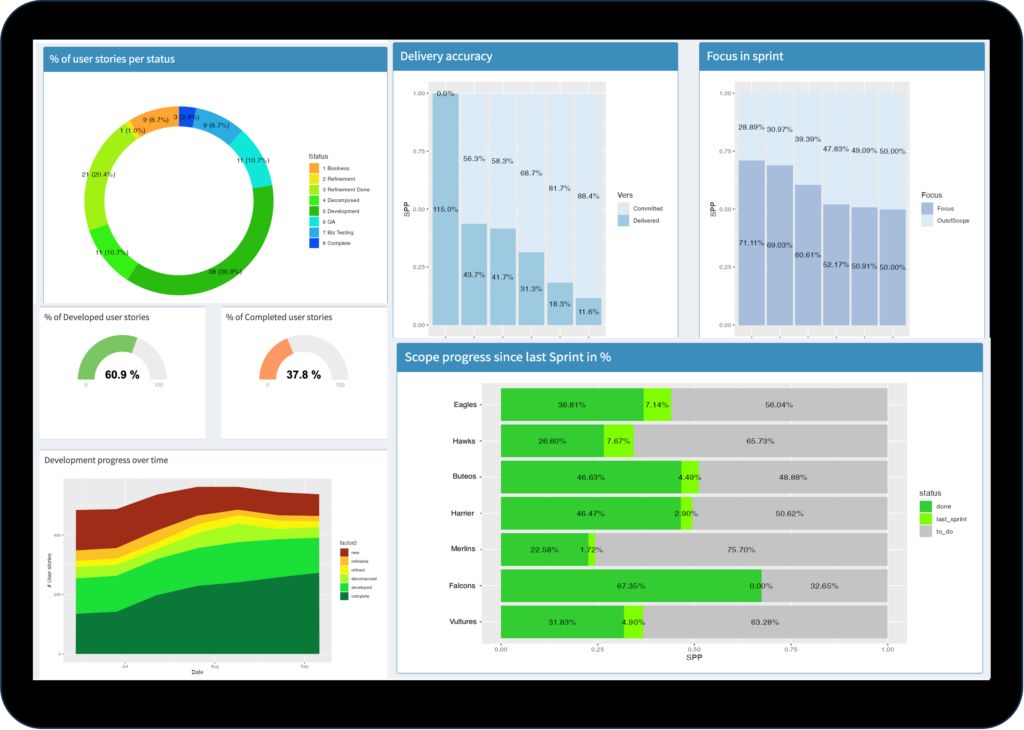
Comparing to earlier Increments (PIs) - are we better in refining, developing and testing the scope, are we better scope focus, bugs reduction and fixing performance.
Engineered requirements, clean Jira foundation, and multi-level actionable analytics — so the numbers you look at are numbers you can defend in a board meeting.
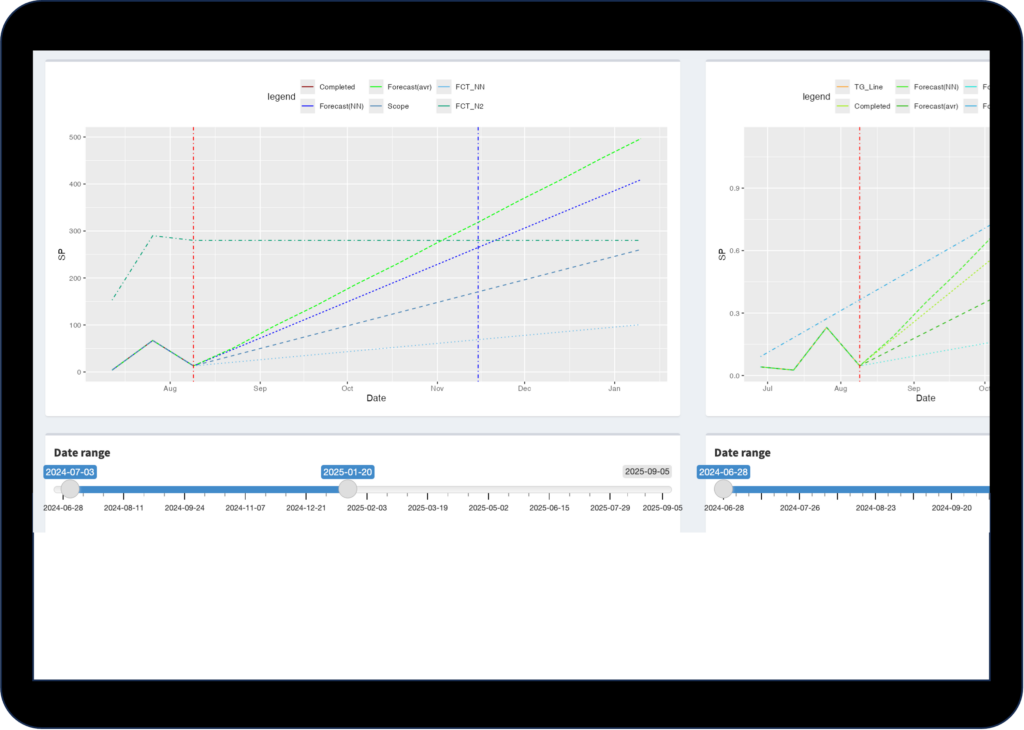
ML-based forecasting and scenario simulation, integrated into the planning cycle — so the data becomes decisions you act on, weeks before the deadline.
A working system installed inside your existing operational environment. We build, train, and hand over — no proprietary tooling, no consultant dependency.
How feasible is our product roadmap and what is next prio?
What scope can we commit realistically next to?
Are we on track with current delivery, detect scope-at-risk
Will scope be delivered in time & rolled out for customers.
Our full framework is structured in four phases and several layers built in a modular way to meet exactly customer needs
We start by understanding current processes, data, and gaps which hurt most and drafting to-be set-up with metering & decision points
Output: Project goals, timelines and objectives. Fixed scope.
We discover and engineer the data layer, clean, enhance, structure and validate data & models, building data flows for needed metrics and insights
Output: A live, trusted, clean data foundation needed for analytics and forecasting.
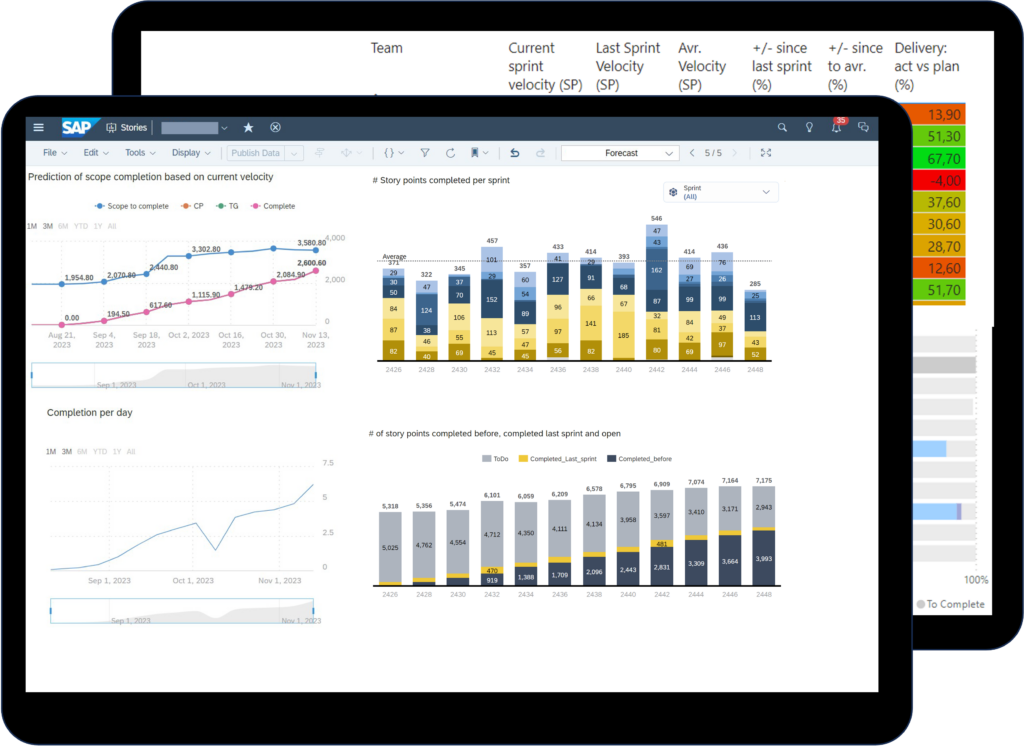
We build multi-level analytics by reports, dashboards across teams, levels, select & train forecast models for multi-horizon plans & simulations
Output: Analytics & forecasts integrated into operational, planning and decision processes.
After integrating forecasts & insights into operations, we train your teams to run the system, hand over ownership & improve on demand
Output: Operational & analytical tools handed-over to customer ready for further improvements.
Numbers below are from recent engagements at large & midsize companies.